The Importance of See Power
Projects that the market measures in hertz can chill or warm local hearts.

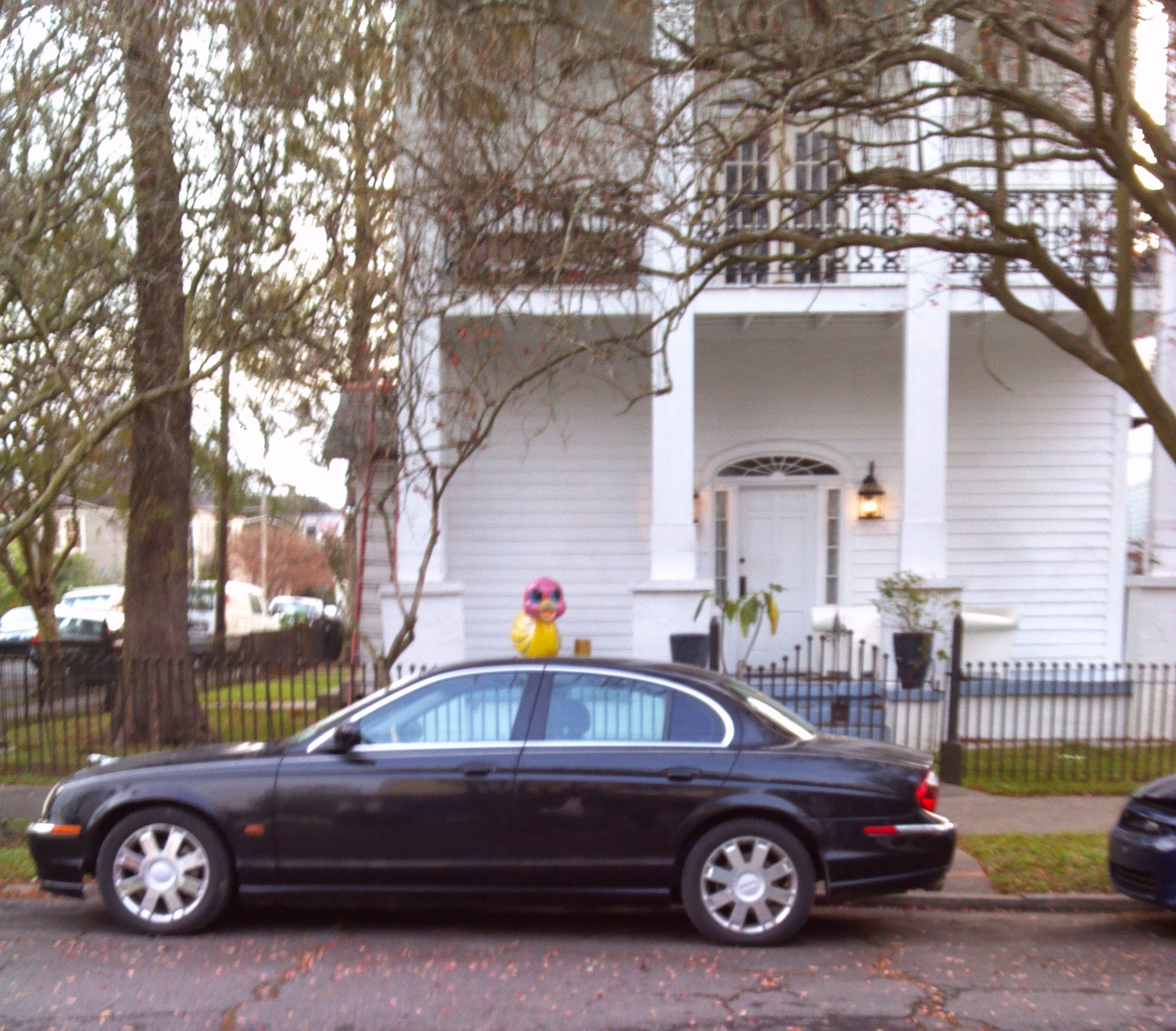
I was ringing in 2013 in a warm and chatty apartment, kibitzing with an acquaintance about our autumn rollick through Superstorm Sandy, Obama’s re-election, and that resource river we called Facebook. I’d just visited New Orleans (where I snapped the duck or turkey above) and seen it recovered, scruffy but replete with espresso bars and second lines, from its disaster. I crooned about making sandwiches for displaced Queens families in a Brooklyn church a week after Sandy: I’d learned about the event on “FB”. He recalled waiting for gas, the same weekend, a few miles away.
There had been no gas deliveries for a few days, he told me, and people leaned on their horns and hollered at each other. “It got Medieval, and next time it’ll be uglier.”
He predicted right, as became clearer in hindsight. And the wind-down of 2025, leaving Los Angeles ash and East Coast floodwater in its wake, has me thinking about Americans’ grip on power supply. And I offer a modest suggestion:
Every neighborhood should strive to support a local electric grid that people can walk past and nickname and carp about, like the local school or library or rec center. Tax and investment policy should encourage neighborhood-scale electric distribution grids, relying on solar energy or batteries, to keep power going after a flood or fire. People should see investments in these grids as opt-out choices for their retirement savings. The grid managers should chitchat at school drop-off and farmers’ markets.
This call for local electricity reflects how energy, primarily burning fossil fuel, both adds to the atmospheric mess that’s warping our climate and reels when climate impacts like fire and flood play out in cities. One steep hurdle to crafting a climate-smart electric system involves the complexity of transmitting power from one hub to another. You can consult any number of experts to defog this topic: like many folks, I endorse the Open Circuit podcast from Latitude Media. To size up the hypothetical case where post-disaster tensions bubble over, set aside the work of connecting one power source to another. Imagine seeking enough power for a neighborhood. That level of power comes from a microgrid, which means just what it sounds like.
Many times, homes and businesses lose electricity because a big station fails in another part of the city. We saw this happen during Sandy. A Con Edison substation took on water, and lights stayed out for a week in a multi-mile radius. One neighborhood, Battery Park City, kept chugging through the failure. Unlike other parts of Manhattan, it had emerged on landfill from a masterplan in the wake of the World Trade Center’s construction. Its developers had installed the kind of local grid I encourage everywhere.
Power supply and electricity prices tend to throttle Americans, especially amid disorder. Big utilities’ record of explaining investment choices and responding to ratepayer pleas looks ripe for change. And as we saw earlier this month in Georgia, voters itchy about funding data-center buildouts have started electing more progressive candidates to run public utility commissions.
So, imagine amplifying organizers who are calling for more neighborhood-level ownership of neighborhood-level electricity supply.
This has become feasible in terms of bits and kit. Work sponsored by The Clean Fight (where I once served as a contract writer) shows how batteries can support local energy needs, acutely so after emergencies. And electricity buildout will continue. Whatever froth or graft arises from AI investment, Americans will need more electric supply unless we all decide to ease off the Internet and mothball electric cars.
Making a grid that evades disaster or recovers quickly from it means making a grid that answers different needs at different times. If leaders in neighborhoods pull together coalitions to design and build support for microgrids, smart money and compassionate policy should follow them.
Among other outcomes, these neighborhoods I’m imagining would sustain a richer ecosystem for electric cars. They would cue fewer gas lines like the ones that spooked my pal back in 2012. And they’d make power supply as visible as petrol supply.
We’d still contend with bots and their bounties, with the erratic effects of warping the climate, and with political deceit and state capture. But we’d see more of it with undimmed lights and unspoiled milk. And at the margins, more of us would know more about what the people running the electric network have up their sleeves.
As you ride off to your Thanksgiving and swing into your holiday season, expect to see lots of samples of large infrastructure buckling. You might sit on the tarmac, stew at a lane closure, or shrug off a Black Friday stampede. As you do, remember what you really cherish. Then go outside and breathe it in, and imagine small networks helping to light your way through the dark.