
Now That You Dimension It...
Praising disaster-ready AI while upholding the unknowable

In a seminar room where experts discussed deluges and infernos, my loudest gulp came at hearing that some AI code would bounce me from a pool of eligible vendors. But I share that gulp to see if we can work together to make it a choral melody.
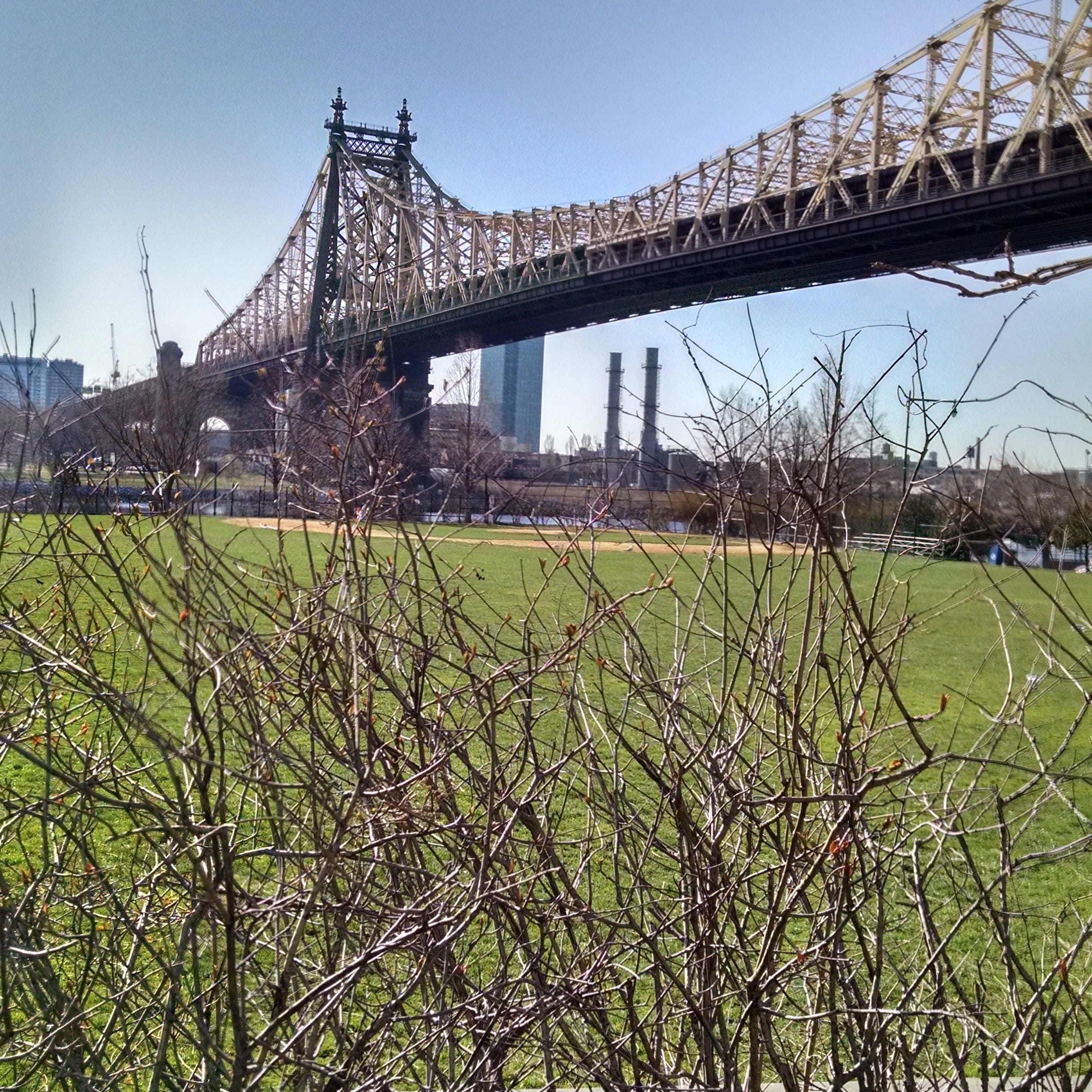
It came in a breakout session of the Urban Tech Summit on the third floor at Cornell Tech’s campus, which sits on New York’s Roosevelt Island. Roosevelt Island faces Manhattan like a geologic Emery board facing a curled hand. From the room, you could see across the Queensboro Bridge and out to the nearest airport. Within, experts were discussing a pilot project in which AI had reviewed existing city resilience plans. These plans spell out perils that city leaders face in our warped climate, like 105-degree heat or annual deadly floods, and map ways to sustainably manage them. The project designers were working out how AI could review, categorize, and publicize plans so other city leaders could learn from them. (One of the designers,
, inspired and subscribes to Resetting to Reality, though I didn’t consult with him on this entry.)In small groups at big white tables, folks discussed ways the project could gain clarity and burrow deeper into risks. One participant suggested the managers might train AI to interview cities’ commissioners and capture their insights. This, he said, might bring a “human dimension” to the case studies the project will offer.
That’s when I gulped.
See, I’m a seasoned interviewer and a lifelong human. I remembered a maxim from interviewing Amory Lovins, who founded the Rocky Mountain Institute to demonstrate how economic growth and carbon-free industry could thrive together. The Stone Age, he often said, didn’t end because we ran out of stones. The freelancer career won’t end because the last freelancer in Brooklyn has given up writing and started winning big in crypto.
Now let’s be clear. The question, like the endeavor the participant meant to bolster, springs from canny and humane roots. People wouldn’t do all the reading and scanning this AI was doing: if they did, they would need years. Hefty human thought and eyeblinks went into coding and training the AI we were reviewing here. You have to tip your cap to the hours and the hope these project leaders have poured.
Similarly, I’d seen a demo a day earlier of a chatbot-driven app called FloodChat. Its pioneer, Nick Nyhan, explained how folks reeling from flood damage had found bureaucratic dead-ends: he had needed to look at dozens of web pages just to learn where to start recovering from a flood. The program uses AI to read folks’ social media pictures, route folks to local (real-life) hardware stores, and zap paperwork. It would be hard to argue against letting flooded-out humans get back to their human endeavors more securely because you get skeevy from the bots in the mix.
But as decisionmakers port tasks to AI and citizens learn to look to AI for aid, spare a thought for the bureaucrat who deploys a timely pun or shows a glint in her eye across a booth. Random human instincts hoist and broaden human recovery, and we should take care to celebrate that human dimension.
Imagine your nail salon (or pet-grooming business, or daycare, or Pilates studio) took on mold after a flood. How do you regroup after finding the forms you need to autofill and the bucket you need to buy - but without hearing a dispatcher answer a rushed question with a smiling voice, or without encountering that clerk who puts in extra time walking you through the acronyms?
The risk rippling beneath AI deployment reveals itself as puddles of civic life we’ve neglected for a long time. If cities invest in face-to-face education and in clean, locally logical public spaces and in wage policies that uphold aspirational families, then time-saving AI will redound to everyone’s benefit. It will cut through the complexity of urban budgets to get people more quickly back to a life with laughs and goals. But!
We risk placing all our chips on quick when we should be plumbing for kind.
If cities keep overweighting budgets toward entertainment districts, subsidizing big corporations, and fudging childcare and healthcare, then well-meaning AI can run into a toxic torrent. People with means will build a habit of bypassing the bureaucracy with bots. The bots will bring their own bias. The assumption will extend and lock in that we are each negotiating the faceless city on our own, scraping by for another day.
Return to the laudable FloodChat. One neato dimension that persuaded me to value it involves its ability to chat in dozens of languages. Now suppose such an app launches in a city with a well-paid, deeply trained corps of disaster relief experts. Suppose prompts from the AI translator route you to a call with an adjuster. Now suppose city, state, and industry have melded to fund and train this adjuster to show empathy, to check in with a colleague at the public schools, to know when and how to joke.
Of course, you can’t budget for the unexpected and, of course, unexpected exchanges occur outdoors even in our digitized reality. Just yesterday a pair of ruddy-cheeked young folks standing on a Delancey Street corner impromptu told me I had a right to show my middle finger to a frantic driver who swerved close to my bike. We build tapps and digital twins to head off huge risks, so that small connections can flourish.
So you might anchor to the fact that AI can unlock lessons that can save lives, and trust the living to brighten those lives. But trust, as it happens, comprised the gift that nearly every Summit panel invoked as necessary and elusive.
In 2012, a neighbor noted how folks had set up water-sharing and cell-phone charging stations using word of mouth and handwritten signs during the post-superstorm power outage. The same might happen in 2026. But if you gave me a nickel for every parent on the playground who joked about how nobody reads books every year post-2007, I would buy you a sushi dinner. Each year you’d get an extra roll. And if I had a nickel for every parent who stared at a phone instead of chitchatting (hat-tip to
), I would rent you a hotel room. And you’d check in on a screen.The Summit ended with a panel on reconciling AI to claims for human rights, humane budgeting, privacy, and inclusion. I missed it to make my weekly fitness class in my neighborhood. I got to catch the tram back to Second Avenue, and got to overhear some other riders.
Four of them seemed to be “tram tourists,” wearing octagonal sunglasses and carrying weighty pens and comparing this ride to gondolas in Europe. One was a photographer with some company involved in running the tram: he took pictures with a film camera and told his neighbor that he lives in Colorado and avoids Denver because “that’s where they keep all the people.” The four-minute ride left me with a lift in my heels.
I didn’t need to know any of those tourism or homebody details: they didn’t affect the roof over my head or the balance in my checking account. AI will help shore up those vital things as the climate ride gets more rollicking. I hope I get to write some of the stories that capture what it doesn’t need to catch.